A New Standard for Inclusive Perinatal Care
A clinically grounded, trauma-informed screening tool that fits inside the existing visit — no new appointments, no new workflows, no new patient records.
DadCare is a paradigm-shifting clinical approach to pregnancy. Whereas, pregnancy care has always centered on the mother, every pregnancy is shared biologically and psychologically with the father. 50% of the genes are paternal and 50% of the epigenetic load is paternal. The BFIP model, Bringing the Father into Pregnancy, by acknowledging the father as a clinical participant in pregnancy, changes pregnancy management to a wholistic mother/father/fetus reality.
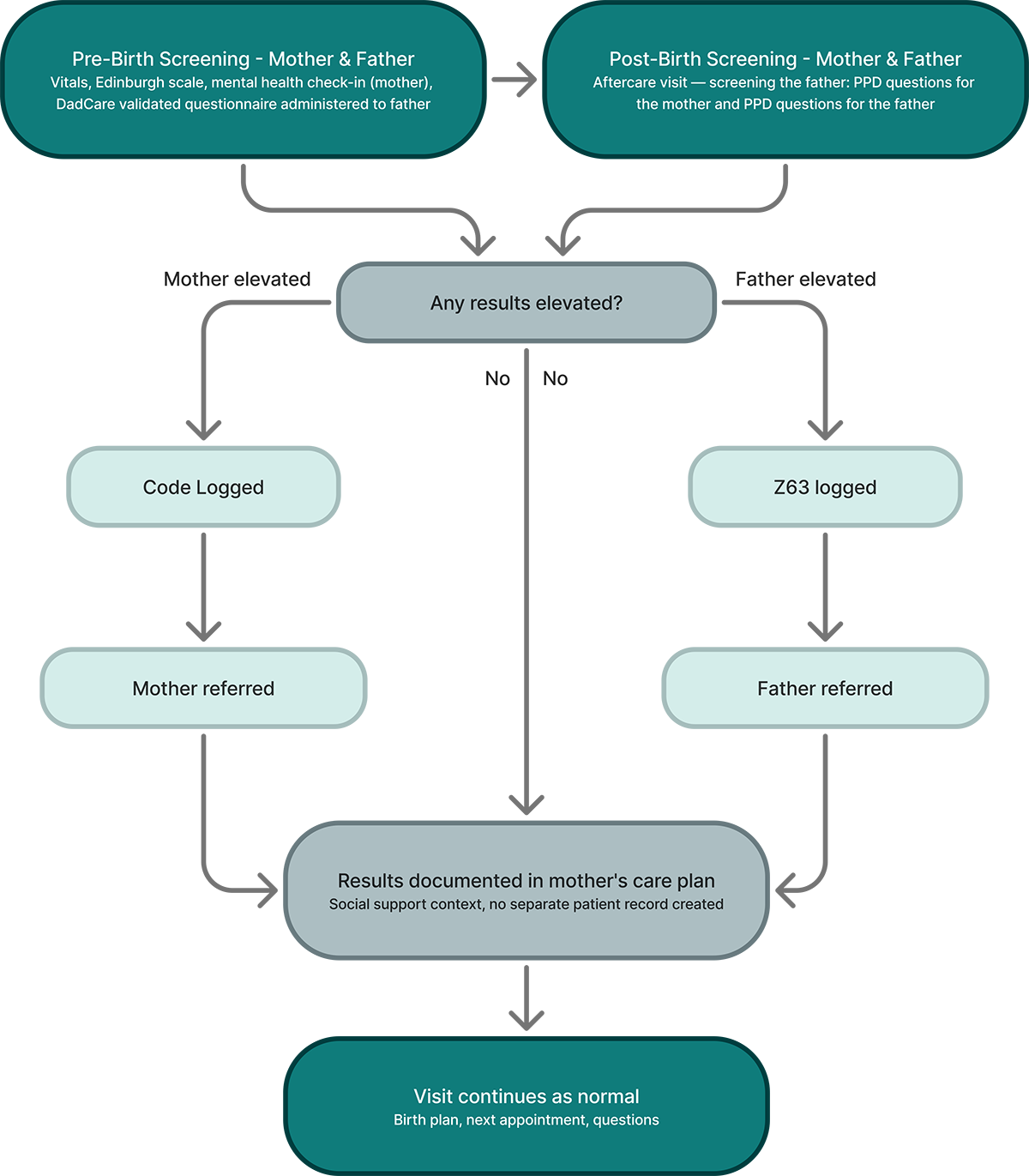
As of 2026, most outpatient perinatal settings are required to screen for social determinants of health, including social support. The Father's Before and After Birth Questionnaire meets that requirement directly. It's administered to the father during the mother's existing visit, documented in her care plan, and triggers a referral pathway if needed.
The Father’s Before and After Birth Questionnaire brings decades of overdue innovation to pregnancy management. BFIP is a medically integrated tool that turns the father’s medical history and psychological state into clinically relevant fact. The father becomes integral to the medical record and medical management in pregnancy wellcare.

Why It Matters
Fathers feel the weight of new parenthood too—but their struggles often go unseen. When we support dads early, we empower families, ease the load on mothers, and create healthier beginnings for children. The BFIP Kit makes that support simple, timely, and long overdue.
- 10-20% of fathers experience postpartum depression (PPD)—yet few are screened.
- 7 times as many fathers as mothers commit suicide in the first thousand days after childbirth..
- Paternal PPD increases the risk of maternal depression, infant developmental delays, and family breakdown.
- Mental health challenges in fathers often go unrecognized—manifesting as anger, withdrawal, overwork, or substance use.
- The absence of a father-focused intake is a missed opportunity for prevention and healing.
- Starting in 2026, CMS requires outpatient perinatal settings to screen for social support as part of SDOH mandates. BFIP is designed to meet that standard without adding burden to the visit.
DadCare fills this gap with a tool designed not just to assess risk, but to spark dialogue, mobilize resources, and strengthen families.
What’s in the BFIP Kit
The DadCare Clinician Kit offers a clinically practical, ready-to-use toolset. Everything a practice needs to begin father-inclusive screening in the next visit, built to fit into your existing workflow:
- The Father’s Before and After Birth Questionnaire (English + Spanish)
- Provider Workbook: How to introduce and interpret responses with sensitivity
- “Father-Friendly” Office Adhesive Labels: Signal inclusive care to all parents
- Zoom Consultation at No Charge: One live consultation with Edward M. Stephens, MD, to answer questions, and help your practice get the most out of your BFIP kit
Rooted in evidence. Designed for real-world use. Easy to integrate into any OB-GYN, family practice, or perinatal setting.
Benefits of Adopting BFIP
Bringing the Father Into Pregnancy offers a cascade of clinical, relational, and systemic benefits
- Transforms the father from a visitor into a documented participant in prenatal care.
- Screens and prevents paternal PPD while reducing maternal risk.
- Provides a genetic and epigenetic inventory from both parents.
- Promotes open communication between partners.
- Lowers the risk of premature birth and early childhood depression.
- Allows earlier, more efficient interventions with existing resources.
- Offers complementary screening insights that support maternal wellbeing.
- Empowers institutions to lead in gender-inclusive, trauma-informed care.
- Satisfies 2026 CMS outpatient SDOH screening requirements for social support in perinatal settings without creating a separate patient encounter or documentation burden.
- Connects the father's screening result to the mother's existing care plan through the Z63 social support code: a clean, compliant documentation pathway already built into ICD-10.
This is preventive medicine at its best: rooted in relational health, early detection, and scalable solutions.
How It Fits Your Workflow
The Father's Before and After Birth Questionnaire is administered during the mother's routine prenatal or postpartum visit. While the mother completes her mental health screening, the physician or midwife hands the questionnaire to the father. Their responses take approximately two minutes. The result is documented in the mother's care plan as social support context without triggering a new billing encounter. If the father's result is elevated, a referral is issued to his GP or a mental health provider.